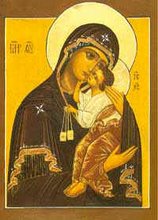
Sometimes I amuse myself by imagining Jesus and the Apostles in situations they might see if they grew up in the America that I know and love. When I was a kid one of the things I did was run around in knee high grass stuffing grasshoppers in a glass jar, so I imagined James and John (the Apostle) headed home with a clay pot full of grasshoppers and James (in his wisdom) warned his younger brother to, "Keep them away from John [the Baptist]. He'll eat anything!"
This all comes to mind because of the familial relationships the significant figures of Christianity had to each other and to Jesus. Of course everyone knows John the Baptist was the son of the aunt of Mary. James the Elder and John the Apostle were brothers who's mother was the sister of Mary (which also sheds some light on the incident of Jesus leaving Mary under John's care at the foot of the cross). Peter and Andrew were the sons of Zebedee who was related to Joseph. Joseph of Aramethea was, allegedly, the great uncle of Mary. According to Eusebius, Jude was the brother of Jesus. This must have been a step brother which has been speculated by a few people to be from Joseph who was a widower before he married Mary. James the Younger may also have been a step brother, but that is in dispute among scholars. Of course not all the apostles were related to Jesus. Judas and Matthew definately had no blood relation of any notability, but that is not to say they never knew each other.
Imagine Jesus and the Apostles at Thanksgiving Day dinner, all at the kids' table and Jesus says, "What are people saying this gravy is made of?" They said in reply, "Beef, others chicken, still others say it is made of power." And he asked them, "But what do you say it is?" Peter said to him in reply, "It is turkey gravy." And he answered, "Blessed are you Simon son of Jonah, for this has not been revealed to you by man...your mother told you!" These things must make one wonder about Jesus' interactions with the future Apostles as children. Did the kids all know where Jesus was when Mary and Joseph looked for him for three days in Jerusalem? In all the sermons I ever heard on the baptism of the Lord I was always given the impression that John had never met Jesus before, but this seems unreasonable in light of their relationship as cousins. It seems that they should have spent a lot of time together as children and when the Gospel accounts of the Baptism are read there is no indication of unfamiliarity, quite the contrary, in fact they appear to know each other well.
This all makes fully half of the Apostles step brothers or first cousins of Jesus, and it tends to make me wonder if Jesus was close childhood friends with all the Apostles. While it may be interesting to think about we will not know for certain any time on this side of the Jordan.
Saturday, January 31, 2009

Saturday, November 15, 2008
A Non-Mosaic Torah
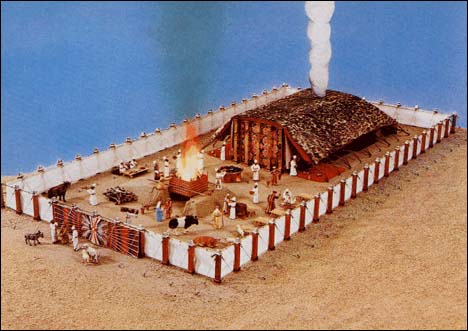
“From that tree you shall not eat; the moment you eat from it you are surely doomed to die.” Of course God was not lying to Adam. The price for sin is blood. When Paul said, “According to the law almost everything is purified by blood, and without the shedding of blood there is no forgiveness,” he was not presenting new information to the Jews, he was simply emphasizing what they already knew to be true. Getting there was a long road though. The first time God purified the world was in Noah’s Flood. Shortly after Noah’s flood God brought Abram into the world and promised him to make a great nation of him because of his faith. Three generations later He saved Abraham’s family from starvation by placing one of the children in a position of authority in Egypt, where he had knowledge of the coming famine and the prudence and position to prepare for it. Four hundred years later the Israelites needed salvation from their gracious hosts of old. With the night of the Passover, the political nation of Israel was born and the people who had found God’s favor found themselves being brought to the foot of Mount Sinai, where they were to receive the Law of Moses and a formal system of restitution and forgiveness.
For the first time in history man and God had an opportunity to share in a bond never experienced on Earth outside the Garden of Eden – that of mans’ sins covered over in the blood of restitution. This was very specific and many requirements had to have been met in order for the sacrifice to be a valid offering to God. The sacrifices had to be in the right place, performed by the right people with the right animals. The priests had to be ordained ministers and wear the right clothes. God’s decision on who were to fulfill all these “rights” rested on Abraham’s faithfulness. The unique relationship the Israelites shared with the Lord through the Law bore many fruits. It put them in a place of moral, spiritual, physical and mental superiority to the rest of the world. This was God’s family. They were His people and it was the Law that was the vehicle that brought them to this exalted position. Without the opportunity to stand before God without the burden of sin on their persons, they would not have been able to achieve anything more than mediocrity.
This was the stage the Christ stepped out onto. In the fullness of time, God come down from Heaven and made His dwelling among us. If Jesus is truly the manifestation of God then Mary is the personification of the perfect Jewish society, but that is also a different discussion. Because the blood of goats and lambs did not remove the stain of sin and completely restore man to God, a better sacrifice was called for. God wanted a better relationship, one made perfect. While the Law was perfect, the sacrifice did nothing more than cover the sins of the people and they had to make the same sacrifice over and over again. “For this I was born and for this I came into the world,” is what Jesus told His disciples. With the backdrop of salvation history, the world was ready to move on to the perfection of the person and work of Christ Jesus the Lord through the framework given to the Israelites in the Law. This would be a valid sacrifice made in the right place, by the right people who wore the right clothes in a perfect framework for the forgiveness of sins once and for all.
If the Torah is not an historical set of documents that was not written by Moses but was written by several authors and redactors over the course of four hundred years (or so) finally finding completion a thousand years after the death of Moses, as the skeptical, liberal critics suggest, the religion of the Hebrews is nothing more than any pagan religion coming out of the Ancient Orient and it holds no more weight with God than any of the contemporary religions of its day.
The Documentary Theory asserts that four major documents make up the Torah as we know it today, namely the Elohist and the Yahwist Documents which were written to explain the history of the Northern and Southern Kingdoms respectively which were married by the Deuteronomic Code and later completed by the Priestly Code which was devised by the priesthood to consolidate power and finally completing the first five books of the Bible. Many even deny the actual existence of Abraham, Isaac and Jacob as historical figures but flippantly explain them away as national myth. This all has very serious consequences for the faithful believer of Judaism and Christianity because it presupposes a piecemeal compilation of the Law of Moses under which the restitution of sins is obtained. If this was not given to Moses on Mount Sinai in its entirety then the claim that it is from God is false! That would mean it does not truly cover mans’ sin in any way shape or form. How then is it different than the cult worship of Inanna in Ancient Sumer? How is it different than the worship of Osiris in Egypt, Dionysius in Greece or Apollo in Rome?
The difference between the ancient religion given to Moses and the surrounding pagan cults is exactly that is was supposed to have been given by the true and living God. How is this religion different if the practice of Temple worship was never instituted in Jerusalem until 621 BC?! if monotheism was never part of Judaism until the Babylonian Exile?! The pillar that holds up the structure of the practice of the religion given to Moses is its ability to restore man’s relationship to God. It allows man to stand before God with his sins covered in the blood of restitution. No other religion has that capability. There is no washing away of sins without a complete law coming down from Mount Sinai in the hands of Moses. Suppose there were no Tabernacle, no Ark of the Covenant and no Lavitical Priesthood upon Israel’s exit from bondage in Egypt. Suppose there were no Commandments and no prescribed liturgical practice by which the Hebrews were to live. That would mean God had no direct intervention in the course of human events, that He had no desire to restore man to Himself and that the world Jesus was born into was completely devoid of religious validity in the eyes of God.
Monday, October 20, 2008
The Apologetics Study Bible
For my birthday my parents gave me The Apologetics Study Bible, which I have grown to love and recommend for everyone. It is put together by the Southern Baptists rather than the Catholics but the scholarship is the highest quality. The thing that impressed me the most was the commentary.
During the Enlightenment a few ideas were proposed that have slowly begun to dominate Bible scholarship which are just false (and sometimes subtly, sometimes not so subtly deny the divinity of Christ). One example is Spinoza. In his Treatise on Religion and the State he writes:
"Sober and literal statements do not move the soul; if Moses had said that it was merely the East wind (as we gather from a later passage) that cleared a path for them through the Red Sea, it would have made little impression on the minds of the masses he was leading....But when interpreted literally, it is full of errors, contradictions, and obvious impossibilities-as that the Pentateuch was written by Moses."
This claim is contradicted by Jesus when he was on the road to Emmaus. He began His explanation of the crucifixion saying, "Beginning with Moses and all the prophets..." He also asserts several times in the Gospels directly that Moses wrote the Pentateuch. I think His testimony is a little more dependable than a disaffected and misguided philosopher who was excommunicated from his congregation for heresy (which Spinoza was). In "Nature and God" Spinoza represents our "problem of evil" as our struggle to reconcile the evil of the world with the goodness of God and concludes that good and bad are mere human inventions which are not relative to God but our own individual tastes and desires. Couple that with his later statement in the same piece of work that "neither intellect nor will pertains to the nature of God." That all sounds like prime time moral relativism to me, but his thoughts and ideas have crept into Christian theology, so much so that it is taken as a matter of fact by so many "Bible scholars" now. I have begun to hear this garbage come out of the mouths of priests almost every time they speak about the Pentateuch.
Of course the first thing I read was the commentary on the Gospel of Matthew (I wrote a defense of the traditional view of it's authorship here) and was delighted to see both sides of the story presented. The authors of the commentary on the Gospel of Mark seem to have more of an open mind than any other Biblical scholars I have heard or read, other than Father Marconi (an historical documentarian and Dominican priest who visited Anchorage and gave several classes on the Apostles John and Paul). In fact Fr. Marconi is the only Catholic priest I have ever heard give more than the biased, one-sided, liberal view of the "Q" document which is part of a theory that alleges Matthew, Mark and Luke came from a "source" document written by an unknown author who may or may not have been an Apostle. My question is, why does a church which claims to be Apostolic in nature resort to an unknown author of the most basic texts of our religion when we have reliable documentation that asserts the same texts to be written by those who we claim founded our church? The idea of the "Q" Document also came out of the Enlightenment period from the German Skeptics.
Apart from the commentaries on the books of the Bible that present a traditional (and in my humble opinion a correct) view of the books of the Bible there are articles dispersed throughout the Bible that address specific questions such as the relationship of Christianity to other religions, the reliability of the Bible account and archaeological evidence that support the claims of the Bible. One article in particular asks the question "Is Evolution fact or fantasy?" The conclusion is that the part of evolution that is true is not very interesting and the part that is interesting is not very true. This has been my view ever since I heard of Darwinian Evolution, so of course I was delighted to see another write such a view. There are brief biological outlines of prominent Christian Apologists as well as "Twisted Scripture" excerpts, which describe how various religious movements have erroneously interpreted Holy Scripture throughout the Christian Era. My only beef with it is that it leaves out the Apocrypha (which could only be expected seeing as to who put the edition together). Over all the Apologetics Study Bible is an excellent Bible and I recommend it for everyone.
Thursday, May 1, 2008
Prayer
Christian mysticism comes to us in the writings of the saints. It is the achievement of union with Almighty God, and its fruit is prayer and the manifestation of God to the World through His saints.
…Presently the window opened, and Brother Matthew looked out between the bars, with his clear eyes and graying beard.
“Hullo Brother,” I said.
He recognized me, glanced at the suitcase, and said, “This time you are here to stay?”
“Yes, Brother, if you will pray for me,” I said.
Brother nodded and raised his hand to close the window. “That’s what I’ve been doing,” he said, “praying for you.”…
…Father Joachim, the guest master, came out of the door of the monastery and crossed the garden with his hands under his scapular and his eyes fixed on the cement walk. He only raised them when he was near me, and then he grinned.
“Oh, it’s you,” he said.
I did not give him the chance to ask if I had come to stay. I said: “Yes, Father, this time I want to be a novice – if I can.”
-Thomas Merton, Seven Story Mountain.
I could not stop laughing as I read about Thomas Merton’s experience entering the monastery and his novitiate. He felt a sense of victory over having met the end of conversation. He described the silence as something that pervades everything, including the stones that make up the buildings. Merton described a year in which a tremendously large number of vocations flooded the novitiate. One of the questions that occurred to him regarding some of the novices was whether they had experienced the spiritual desert too soon and too intensely, whether or not they would have stayed in the monastery had they been better prepared to go through the desert?
There was a quote I heard which I was always opposed to until I was able to put it in context with the spiritual desert. “Pain is the touchstone of all spiritual growth.” What Merton called the spiritual desert has also been called the dark night by St. John of the Cross. It is an emptiness, almost like a sadness or a desolation, but it is a movement of the soul rather than an emotion. It is also a natural progression in everyone’s spiritual life. God seduces us. He entices us with the things we love and yearn for. We are sent consolation, joy and elation, again as movements of the soul rather than emotions. In my own life it has been in solitude, silence and prayer that joy and elation has been experienced, as well as in the active life, during liturgical practice (which I consider semi-active, semi-contemplative), in bringing Holy Communion to shut-ins and the incarcerated, in speaking with the wounded, in silence with the wounded and in the company of the dying and their families. After the seduction comes the let-down, the desert, the dark night. The desert may come upon us at our invitation or at God’s command.
St. John divides the dark night of the soul into three groups, the dark nights of the senses, of faith, and of the will/memory. The night of the senses is the onset of spiritual growth. It is the purification of the soul by the deprivation of worldly things for the pursuit of Divine union. St. John described our senses as the windows the soul uses to peer out at the world. When we empty ourselves of the desires of the senses we are able to tread the path towards union with God.
Within the night of the senses we are able to enter further into the night of faith. This night is darker than the night of the senses. It is an emptying, or a resignation and detachment of our understanding, perception, feelings and imaginings for the sake of Divine union. This complete resignation and detachment allows God free reign within the soul and He illuminates it with faith. The result of the dark night of faith results in the purging, or putting to death, the understanding, the abandonment of the intellect, and the grounding of the soul in faith. Our memory is our knowledge formed by the senses. As we reduce our memory, God is able to perfect our nature and transform it. A will transformed for the sake of charity is able to perform works of faith which gain great merit. The verse that struck me was, “Love covers a multitude of sins.”
This all seems like a grand plan when one invites it, but sometimes it catches us unaware. I went for about two and a half months in the desert one time. It seemed as though the only pleasure I could find was in choir practice for two hours every Thursday night. Even Mass on Sunday morning left me feeling empty. It wasn’t the first time I had been through the desert. I was well aware of the writings of St. John and Merton. That brought no consolation though. I felt abandoned by God. I knew I wasn’t. The movements of my soul deceived my emotions and all I could do was struggle through to the end. There is only one time in my whole life I ever remember inviting the dark night. It didn’t come, not when I wanted it to anyway.
The point of it is that I was properly prepared for the dark night. When it came, my soul was grounded in faith. Intellectually, I knew what my emotions told me was a lie, but that did not diminish the feelings of isolation from God. If I were any less prepared, it would have been easy to harden my heart and move towards a position of unbelief. Could I end up as an atheist or agnostic? Is that how people lose their faith?
Sunday, April 27, 2008
The Gospel of Matthew
A vein of theology infecting the Church today makes an attempt to discern who the "real" authors of the Gospels were and when they wrote. One of the claims is that the Gospel of Matthew, long considered to be the first Gospel (by Matthew, hence the name), was actually written after 70 AD by an author who was not a disciple of Jesus. This claim is based on the facts that Matthew and Mark are so similar to each other that one must have been copied from the other and the inclusion of the predicted destruction of the Jerusalem Temple in the Gospel of Matthew which did occur in 70 AD.
Papias, bishop of Heirapolis, who was a student of the Apostle John and a companion of Polycarp (also a student of John), wrote that Matthew was the first to record a Gospel in writing, which he did for the Israelites in the Hebrew language. Irenaeus, bishop of Lyon, wrote "Against Heresies" at the end of the Second Century. To the best of my knowledge that has never been disputed. In it he said:
Matthew published his gospel among the Hebrews in their own tongue, when Peter and Paul were preaching the Gospel in Rome and founding the church there. After their departure Mark, the disciple and interpreter of Peter, himself handed down to us in writing the substance of Peter's preaching. Luke, the follower of Paul, set down in a book the gospel preached by his teacher. Then John, the disciple of the Lord, who also leaned on his breast, himself produced his gospel, while he was living at Ephesus in Asia.
There is a lot of information we can glean about the dating of the Gospels from this writing. Peter and Paul were both martyred in 67, so we know that Matthew wrote his gospel before that date. Mark wrote his gospel after that year because the people of Rome loved Peter so much they insisted Mark record his teachings. It is plausible that Mark and Luke were writing their Gospels at the same time. John wrote his gospel sometime before 74 because that is when he left Ephesus. We must be able to assume the accuracy of Ireneaus's statements because of his proximity to the events. If one should question his accuracy by virtue of being recorded some one and a quarter century later, I will offer the example of Emily Dickenson as a response. She did not publish more than a dozen of her poems during her own life time, but today (122 years after her death), we know with strong authority that she wrote the poems generally credited to her based on our proximity to the event and the witness of persons close to her.
First let's establish the authority of the Epistle to the Romans. It is universally accepted without question that Paul is the author of this epistle. Eusebius, in "The History of the Church" dates Paul's execution to 67 AD, which is generally accepted as accurate. Paul makes four clear references to the Gospel of Matthew in his Epistle to the Romans. In Romans 9:5 Paul wrote "...theirs (the Israelites) the patriarchs, and from them, according to the flesh, is the Messiah." This statement is a reference to Matthew's genealogy of Jesus found in 1:1-16. Again, Romans 12:14 finds Paul exhorting the faithful to "Bless those who persecute, bless and do not curse them." This is exactly what Jesus said in the Sermon on the Mount found in Matthew 5:38-48. In Romans Chapter Two Paul entreats Christians to abstain from judgment of others and follow the path of a true disciple in the same manner Jesus did in the end of the Sermon on the Mount (7:1-5, 21-23). This is not an exhaustive list by any means, but it suffices to present the argument that the Gospel according to Matthew was written before the year 67, not after the year 70.
Philo was a Jewish philosopher from the city of Alexandria. Although he was trained in the Greek tradition, his emphasis was on the Jewish canon of Holy Scripture. Born in 20 BC he died in 50 AD. This is all significant to Matthew's Gospel because of one of the things Philo observed about the church in Alexandria:
They read the sacred scriptures, and study their ancestral wisdom philosophically, allegorizing it, since they regard the literal sense as symbolic of a hidden reality revealed in figures. They posses also short works by early writers, the founders of their sect, who left many specimens of the allegorical method, which they take as their models, following the system on which their predecessors worked.
Paul’s writings are universally given dates of authorship after the death of Philo, so we can exclude any of his writings from those Philo mentions. The Letter of James is concerned almost exclusively with moral conduct, not with allegorical interpretation, so it, likewise, may be excluded. 1 & 2 Peter are dated to the mid Sixties, also too late. All three of John's letters are given a date in the late First Century along with Jude. The Revelation to St. John is well known to be from the Apostle John while exiled on the Island of Patmos, so it may also be excluded from consideration of what Philo was referring to. That leaves us with the Gospel of Matthew, which fills the bill exactly, written by a founder of the sect with many specimens of allegorical interpretation!
Sunday, April 13, 2008
Swimming the Tiber II
I remember the disappointment I felt with the news that nothing was going to happen until September. There was another devout Catholic at work. He was about ten years older than me and very knowledgeable about the Church. He devoted his college years to learning Church history (other than his college studies, which only included engineering) and encouraged me to read a lot. He always asked if the books I read were published by Ignatius Press. I didn’t understand why that was so important to him, but I do now. I eventually asked him to sponsor me in my confirmation, which he was delighted to do. All summer I eagerly awaited the beginning of RCIA. As usual, I loved it. I loved everything about being Catholic, except that all the people who ran RCIA kept saying that we would become Catholic on Easter. Didn’t they understand? I became Roman Catholic on the day I visited Our Lady of Las Vegas.
My study of the Church began with the Saints. St Francis of Assisi, St. Francis de Sales, St. Teresa of Avila, St. Therese of Lisieux, St. John of the Cross, St. Thomas Merton and the like filled my book shelves. Prayer was an ongoing search for me. I looked everywhere I knew where to. Finally going on a silent retreat at a Carmelite retreat house, I was introduced to the Liturgy of the Hours. I knew instantly that was what I was searching for. I took an interest in the different religious orders and their founders. The realization that history is not about places and dates eventually dawned on me. It is about people. I love people. Since then I have gobbled up history books and another realization came. History is about God. The primary purpose for learning history is to learn the Divine waltz we are dancing, to look back and try to see how God seduces us, how He longs for us and what He does to approach us. How could I have missed that all those years growing up?
My Baptist theology had deep roots though. My complete submission took a full six years, a little at a time, always a little more to go to fully embrace the traditional teachings. I ended up taking the advice of my sponsor and jumped in with both feet on learning Church history. The more I learned, the more I loved it and the more I was able to give myself to the Church. I quickly began to attend Mass at 6:00 PM every Tuesday at St. Joe’s. I was on fire! As soon as I could I became a lector and a Eucharistic minister. For the next three years I helped in RCIA and I helped start a Bible study at St. Francis. For a while I was at church every day of the week, I just couldn’t get enough of it. My primary purpose for becoming a Eucharistic minister was to bring the Eucharist to shut-ins. I wanted to bring it to hospitals, but there were none in my parish bounds, so I took Holy Communion to a couple total care and partial care centers. Eventually I began to bring Holy Communion to the county pokey too, which I found to be my favorite form of service. Our Lady held Mass every morning at 6:30 so I added Fridays to my Mass schedule. A little at a time I began to add more days until I was going to Mass six days a week. I also moved across town, which I used as an excuse to begin going to Mass at St. Joe’s on Sundays. It truly was an excuse because then I had to drive even further to get to church Sunday morning than I would have if I had stayed in St. Francis. I eventually joined the choir at St. Joe’s and took on service at the Shrine of the Most Holy Redeemer (which is on the Las Vegas Strip).
Right after I moved and starting going to St. Joe’s Parish I also became interested in Greek Orthodoxy. On several Sundays I attended both a Catholic Mass and the Divine Liturgy at St. John Greek Orthodox Church (which ended just in time to zip over to the noon Mass at St. Joe’s). The Eastern services were so mystifying! I was also excited to see all the women wearing nice dresses or skirts and all the men wore suits with ties (a few just wore polo shirts or sweaters with jackets, but that was okay too). The vestments were so elaborate and beautiful, incense was used every Sunday, the Liturgy was sung – all of it! and no one left before the end of the service. Everyone got up and kissed the priest’s hand before leaving the sanctuary. It was very exotic! It was also very exciting. I felt transported to another age, another place. I was also learning about history. The Church Councils and the Filioque scandalized me. Having made a close friend who was just returning to the Orthodox Church (He introduced me to blogging. His site is A…Sinner, over in the blog roll) I grew more and more intoxicated with the East. He attended St. Paul’s Russian Orthodox Church on the east side of town (the side I also lived on). We spent a lot of time together and our favorite thing to talk about was the Church. I attended several Divine Liturgies at St. Paul.
After a year or two I finally decided to leave the Latin Church for the Greek. It was such an agonizing debate for me. I loved the Roman Church with every fiber of my being, but I had a tremendous pull towards the Greek Church. It didn’t help that I heard a lot of Anti-Catholic rhetoric at the time. That never affected my love for the Church, but it had a strong impact on my thinking. Maybe I would grow to love the Greek Church as much as I do the Roman, at least I made a habit of telling myself that. Then something strange happened. I felt an overwhelming urge to learn Latin! This from the same person who vehemently denounced the practice of the Roman Church of holding on to an antiquated language that no one could understand for so long. It shocked me, but I figured it was God’s way of telling me to remain in the Latin Church. That was about four years ago. My love for Catholicism has only grown and I have come to form some very definite beliefs about the Filioque (I am no longer scandalized) and the relationship between the East and the West. Reunion remains foremost in my heart. The final turning point for me was in the confessional booth. I was so tired of fighting. For the most part I was on board with the teachings of the Church, but there were just a couple key issues that I hadn’t surrendered on. Only a year previously I had surrendered on the use of birth control. That was probably the hardest to swallow because it still sticks out in my mind. I do not even remember what else I had refused to admit the Roman Catholic Church was right on and I was wrong. That was me just being obstinate.
At the time I was experiencing emotionally the hardest time in my entire life so I turned to the Church more than ever before. I was celebrating the Sacrament of Reconciliation every other week. Only one other person was in line that day, so I only had a short time to make an examination of conscience, so I sat down with a short list. As soon as I sat down a new article for confession came to mind and I told the priest, “I have always considered myself to be the final authority for all matters of faith and theology in my own life and I want to submit to the teachings of the Church.” Six years after that fateful day in Our Lady of Las Vegas I was finally able to give myself fully to Rome and I do not think I have ever been more liberated in my spirituality. Scott Hahn certainly got it right when he said, “Home, sweet Rome.”
Friday, April 11, 2008
Swimming the Tiber
My dad was born into a devoted Roman Catholic family. He grew up as an altar boy and the whole nine yards. My mom grew up as a devoted Southern Baptist. After they got married my dad became a Southern Baptist and that is the church I was baptized in. I still remember that night clearly. It was late in the evening when we arrive at church. I went upstairs to a changing room where I was given a white gown to put on. There was a woman there with the hand full of us getting baptized. I wondered what she was doing there. She looked as old as dirt to me, who knows, she may have been only in her Forty’s. But why didn’t she get baptized at the right time? Doesn’t everyone do it when they’re five? At the appointed time we were all ushered to the top of the stairs above the baptismal pool and we were called down one at a time. The preacher asked me if I wanted to be baptized, which confused me. Why would I do all this stuff to get baptized if I didn’t want to do it? I didn’t know he had to ask me that before dunking me three times in the name of the Father and of the Son and of the Holy Spirit. I remember wondering if I was going to be scared to go under the water, but I wasn’t. That was the first thing I thought stepping into the pool, “I’m not scared.” When my family got home that night my parents sent my brother and sister up to bed and I stayed down stairs to talk with my parents. They asked me if I understood what happened tonight, which I did, and if I understood what Jesus did, which I did. I am not sure if we spoke about anything else but I remember being amazed at the depth of my understanding of God and His action in my life. Of course, I was well prepared for that night. My dad taught Sunday school and I loved the Old Testament stories. I remember learning about the Garden of Eden, Noah’s flood and why we see rainbows (which always represented God to me, to this very day I think “Every time I put My bow in the sky I will remember My promise to you,” whenever I see one), the destruction of Sodom, Abraham and Isaac, the flight out of Egypt, David and Goliath, Daniel in the lions’ den, Shadrach, Meshach and Abednago. I knew those stories very well but I never remember learning the New Testament stories (except Jesus feeding the multitudes because one of the hero’s of the story book I had was a boy named Joel, about my age, who brought the fish to Jesus), but I know I knew the Gospel because I knew all about Jesus.
When I was seven we moved from Anchorage, Alaska to Jacksonville, Florida (where it finally made sense to be Southern Baptist!) because my dad entered a seminary school there. We only stayed one year before he joined the Army though. We used to go to church twice a week, but now we didn’t go at all. I never gave it much thought. To keep quite during church my brother and I used to bring toys and play in the back of the church. I remember bringing He-Man action figures one time, but I felt it was heretical because the toys were too big! It didn’t matter any more. When I was a preteen and a teenager I began to read the Gospels at night lying in bed. Our family read the Bible after dinner sometimes and my dad (who I thought knew everything in the world) would teach us the finer points of Baptist theology. I suppose I had a prayer life suitable for my age, but something happened in my middle teen years. The cares of this world stopped drawing me closer to God and began to blot Him out. My love for the Lord never diminished and my faith never diminished but my attention dropped like a rock. When I was seventeen I was on my way to school one morning and the idea occurred to me, “You should become a priest.” That was immediately supplanted with the thought that I would rather have a family. I was curious why a Southern Baptist boy would think about becoming a Roman Catholic priest. When I was nineteen I joined the Navy and began to try to live up to the poor reputation of sailors. I was pretty good at that. It seemed that I just coasted along. For several reasons, mostly my hedonistic life style and my disgust with President Clinton, I decided to leave the Navy after only five years instead of twenty.
My life was about to change dramatically. I moved to Fabulous Las Vegas, Nevada! I started to work in civil engineering and land surveying. I felt like I found a really good job at a small but very good firm – Alpha Engineering. Right at the end of my enlistment in the Navy I had just about as much fun as I could handle and had to look for more civilized ways to spend my time. It was the Lenten Season of 2000 and I started to feel convicted by the Holy Spirit to tithe. So, I decided I better find a church I can belong to so I can fulfill the wishes of the Lord. At that time my mom was finishing RCIA. She and my dad decided to return to church and my dad wanted to return to the faith he grew up with. I had been to church with them several times (when ever I would visit for the weekend, they lived about 150 mile away from me), but I never really considered the Catholic Church in my search for a congregation to be a part of. I was certain I would join a Baptist church. In fact, there was a church really close to my house walking distance away that always seemed to be jamb packed, so I drove by one time to see which church it was – St. Joseph, Husband of Mary, Roman Catholic Church – I knew immediately I would never attend that church! Interestingly enough I ended up going every Tuesday evening for years and singing in their choir some time later. There were times when I was growing up I attended Catholic Mass. One of my good friends was a Catholic and whenever I spent the night at his house his mom would tell me to go to church with them. I never found it objectionable; I just thought I would be a Baptist, maybe even a preacher. I attended the closest Baptist church twice, one of the times was Easter Sunday, but both times the preacher was slamming the Roman Catholics. That really put me off and I decided not to return to his congregation. Even though I did not want to become a Catholic, I held them up as good Christian people. I made the rounds in Las Vegas but never found a church I was comfortable with. All the services I attended felt a little empty. I did not know exactly what I was looking for, but I knew I would know when I found it.
Several weeks had gone by and it was getting on towards the end of the Easter Season. It may have even been Pentecost Sunday. I do seem to remember red vestments, but of course, that may be my imagination filling in the details. I thought back to my first conscious experience with the Catholic Church, in the Sixth Grade. I went to the Children’s Mass with John Gendron (my good Catholic friend) and he told me how to receive Holy Communion on the way in. I said, “What?” and he answered, “Just do what I do.” Then Monday morning Emily (who was in our class) scolded me for receiving Holy Communion without being Catholic. I remembered visiting John after he moved away and going to church with him again while the bishop visited. He was just another preacher to me. I thought about attending Mass with my parents recently and talking to my dad about the Catholic Church. I knew he loved it. He used to tell us stories about when he was a kid, being an altar boy and playing Mass with his sister and telling people he would be the first American pope. I finally resigned and went to Our Lady of Las Vegas Roman Catholic Church. That was no empty service! The Spirit of the Lord filled the entire sanctuary and I was hooked! Walking out of the church towards my car I felt like I was walking two feet above the ground. On that very day I became a devout Roman Catholic. I went back to Our Lady of Las Vegas several times, but the parish I belong to (according to the boundary lines) was St. Francis de Sales. It was the middle of June before I found my parish. In the mean time I had spoken with my parents and they encouraged me to join RCIA, which I was eager to do.
Friday, April 4, 2008
New Blog Site
I have begun to post blogs on another site - The Black Cordelias. It can be found here and in the blog roll to the right.
Monday, March 31, 2008
Solemnity of the Annunciation
The angel of the Lord declared unto Mary…And she conceived of the Holy Spirit.
Behold the Handmaid of the Lord…Be it done unto me according to your word.
And the Word became flesh…And dwelt among us.
Pray for us, O Holy Mother of God…That we may be made worthy of the promise of Christ.
Pour forth, we beseech You, O Lord, Your grace into our hearts, that we to whom the Incarnation of Christ, Your Son, was made known by the message of an angel, may by His passion and cross be brought to the glory of His Resurrection, through the same Christ out Lord. Amen.
Normally I attend 5:30 PM Mass at the Mission San Diego. Because it ends at about 6:00 we always pray the Angelus after the final blessing, except during Easter then we pray the Regina Coeli. That was the last thing on my mind today as we received the final blessing from our priest. The only thing I thought about was how perfect it is to pray the Angelus on the Solemnity of the Annunciation and how the events of history are represented in the prayer.
While the focus of the Annunciation is on Christ, I can not resist expressing my love for His mother. My love affair with her had a rocky start coming out of a Protestant denomination in my mid-twenties. As a Protestant, I never gave the Mother of God a second thought; she was completely eclipsed by the Lord. As I slowly subjected my thinking to the teachings of the Roman Church my affection slowly grew and grew. The first leap out of Protestant thinking came from an argument I first heard from Scott Hahn. He pointed out that as a Christian we are called to imitate Christ. In our imitation of Christ we need to honor Mary as Jesus honored her as His mother. That was not hard to swallow either theologically or morally. Praying the Hail Mary was not hard to swallow either because it comes straight out of Holy Scripture. Then I began to pray the Rosary regularly. Getting to know the mysteries of the Rosary and meditating on them while praying the Rosary warmed me up to Mary even more. After discussions with my dad it was pointed out to me that everything Jesus has as a person came from Mary. All His DNA is Mary’s DNA. That would give her a special distinction among mankind. She is the only person that ever lived that shares the exact DNA of God Himself. My latest development in the way I view the Mother of God came as the result of reading Roy Schoeman’s book Salvation Is From the Jews. The last chapter of his book is a collection of conversion stories of Jews becoming Roman Catholics. It appeared that Mary was critical for a disproportionately large number of Jewish conversions to Christianity. It occurred to me (with the help of some discussions with my dad, again) that Mary would be very important to devout Jews because she is the personification of the perfect Jewish state (which may merit a post in itself)!
The gravity of the Incarnation goes much deeper than the I portrays (of course). God came down to Earth and became one of us! That gives dignity to every man, woman and child that ever lived no matter how degenerate, debased or repugnant they are or were. They now share the same form and likeness of All-Mighty God. God never wanted to be a snowy plover or a humpback whale or any kind of animal. Humans were the only creatures He willed to be His own. Now all of mankind, whether Christian or not, can say, “I am like the Most High.”
Finally I will leave with a poem by John Donne, who I was introduced to in college and immediately fell in love with.
Annunciation
Salvation to all that will is nigh,
That all, which always is all everywhere,
Which can not sin, and yet all sin must bear,
Which can not die, yet cannot choose but die,
Lo, faithful Virgin, yields himself to lie
In prison, in thy womb; and though he there
Can take no sin, nor thou give, yet he ‘will wear
Taken from thence, flesh, which death’s force may try.
Ere by the spheres time was created, thou
Wast in his mind, who is thy son, and brother,
Whom thou conceiv’st, conceived; yea thou art now
Thy maker’s maker, and thy father’s mother,
Thou’ hast light in dark; and shutt’st in little room,
Immensity cloistered in thy dear womb.
Tuesday, March 25, 2008
Kingdom of Heaven
I love the movie Kingdom of Heaven. It combines my three favorite subjects in the whole world: the Church; the military and history. I was thinking about that movie and modern popular culture in America this past weekend. For all of my love of the movie, there are things about it that just drive me up the wall. My opinion is that if you are going to make a movie based on historical events then get the history right! The producers got so much of it right that it would be easy to overlook what they got wrong. The costumes were right, the major events were (for the most part) right, the weapons were right, the tactics were right and the characters were (mostly) right.
One thing I found particularly offensive was the portrayal of the monastic orders of knights. A major blunder was that none of the characters portrayed as Templar knights were actually Templar knights in real life. Teutonic knights were portrayed as little more than thugs and henchmen better suited to make an appearance in a mob movie. The Templar knights were delivered as riotous, undisciplined war mongers, and the Hospitalar knights were made to be seen as irreligious!? One of the main characters (a Hospitaller) made a statement, "I put no stock in religion..." That kind of a statement would never have been found on the lips of a man who took vows in a religious order of knighthood. Another error that I found offensive took place during a conversation between two men overlooking a bunch of Muslims praying on the beach. It was explained that Muslims were allowed their prayers as long as they payed the tax. That sounds suspiciously like the dihmmi required by Muslims for Christians and Jews (and Hindus in Muslim controlled areas of India) to pay in order to keep practicing their religion. I am not personally aware of any Christian ever exacting that type of a tax on another (we prefer that you convert!). Finally, one more scene I wish to point out for its errors occurred after the Battle of the Horns of Hattin (in which the Christian forces were completely destroyed). In the movie the king of Jerusalem and his chief lieutenant were taken prisoner. That really did happen in history, but what did not happen was Saladin offering a glass of water to the king who passed it to Reginald of Chatillon who subsequently had his throat slit for taking the cup which his king refused. What did happen (as was customary) was the prisoners were offered to convert to Islam and gain a place in Saladin's kingdom. All refused and Reginald immediately called for Saladin's conversion to Christianity at which point he was decapitated. The morning after the battle was over 230 militant knights chose to remain true to Christ and suffered the same fate (all who were given the option chose not to convert).
This may all sound trivial and the rantings of someone who is too obsessed with the details, but it's not! What we are witnessing is the attempt to defame the Church and elevate Islam to something that it is not (a religion on the same level as Christianity and Judaism). The movie was obviously researched extensively, otherwise how could they get it right that the siege of Jerusalem lasted three days, the defense was mounted by Balian of Ibelin and the safe passage of all Christians to Christian held land was the result of the siege after the threat of burning the Muslim holy places forced a parlay. How can you get all that right without knowing that the Templars were the most disciplined military force in the whole Middle East or that the Hospitallers prayed the Liturgy of the Hours and attended Mass every day? The point is that modern popular culture wants to defame the Roman Catholic Church as much as it can and one way to do that is make everything that was bad the fault of the Pope or his agents and everything that was good the credit of secular rulers. This is because the Church speaks out against sexual promiscuity, drug use, abortion, the death penalty, unabated greed, homosexuality, relativism and any number of other degenerate behaviors while lifting up Christ, heterosexual monogamy, family life, regular church attendance, chastity, the Sacramental life, civic and social justice, etc, etc.
Sunday, March 23, 2008
Happy Easter! The Lord is Risen!
The church I attend is just a couple blocks away from the stadium the San Diego Chargers play in and when I drove up today it was just like Sundays during football season. The streets were completely devoid of parking spaces. I had to park in a mall parking lot and walk about a quarter of a mile to church. Don't get me wrong, I'm not complaining about it, I wish that happened more than just on Easter and Christmas. As I drove down the freeway to get there I was brimming with joy! Easter is my favorite holiday all year. There is always a tinge of pain though. I had a dream a couple years ago that I get a reminder of when I drive up and down Highway 125 through Spring Valley (east of San Diego). It reminds me of the dream because it looks similar to the landscape I had in the dream. In my dream I rounded the corner of a valley that a city was nestled in and a wall surrounded it like a medieval European city. Right at the center of the city were two cathedrals directly facing each other on opposite sides of the valley, one was Roman Catholic and the other was Eastern Orthodox. I took the dream to mean that God will reunite the two and they will strengthen each other. That might just be wishful thinking and the dream might not have been from God at all. Only time will tell.
My personal opinion is that the two churches need each other. I have frequently wondered how I could put into words the way I feel about the two churches. I finally came up with an analogy that works for me today. The Eastern Church is sensational and the Western Church is focused on the interior journey. I do not mean the East is superficial, melodramatic or unconcerned with the interior life. I mean the East has such a rich tradition with the incense, iconostasis, elaborate vestments, singing the Divine Liturgy, lots of candles and so on, while the Western Church is really bare bones. The Liturgy is relatively brief, the altar is frequently minimally decorated, sometimes there is not any singing at all. I do not point out the differences to make a statement that one is better than the other, one is just different than the other. It is like the difference between Christmas and Easter to me, one is more an inward expression and the other is more an outward expression of worship. It took me years of regular attendance of Mass to find what I have discovered in the Roman Liturgy (and years of praying the Hours). I find it quite a subtle journey and spirituality, but I sure like it a lot!
Thursday, March 13, 2008
The Beauty of the Roman Mass
The Roman Liturgy of the Mass is a beautiful thing. The depth of the mystery I experience grows on me continuously. It is a mystery for several reasons (and I am certain that I can not name them all). The first that always comes to mind is that as we celebrate the Mass we transcend time so we are present at the sacrifice Jesus made on Calvary. We also make a quick journey through the history of our salvation, beginning with the fall of mankind up to the Eucharist and the reception of God’s blessings with the command to evangelize the whole world. This is not something the Roman Catholic Church just made up one day. This is the way the first Christians worshiped their God, the liturgical format was something inherited by the Church from Israel because the first Christians were all Israelites. The classical interpretation of the Song of Songs is God’s approach to Israel and Israel’s response to the advances of their God. What a perfect metaphor! Beginning with the fall of man God has been approaching mankind as a lover attempts to seduce his object of desire. God seduces us. He approaches us and our response to His advance is prayer (as the Rabbi Ben Zion Bokser so eloquently put it). When I first converted to Roman Catholicism I had no understanding of the significance of the Liturgy. At first I looked forward to the homily, then I preferred the Liturgy of the Word to the homily, but now (as I feel I am more mature in my approach to worship) the part I love the most begins with the offertory and lasts until the reception of the Eucharist. The Liturgy continues to be a call and response, a sort of dialogue between our Creator and the congregation. God initially declares His love for us by proclaiming, through His regent, that He will manifest Himself to the congregation and the congregation answers with the affirmation of His holiness, “Blessed be God forever!” So at the conclusion, being filled with the Word, we are sent into the world to fulfill our Christian vocations.
One of the books I recently read was the Pope’s “The Spirit of the Liturgy.” One of the things that surprised me was his references to paganism. It shouldn’t have though. In the beginning of the book the Pope pointed out that the entire cosmos is subject to the Christ. Of course it is and those who observe the norms of the cosmos witness the testament of God. According to the Pope the first day of Creation was the 25th of March, which was also the day of Abraham’s sacrifice, which was also the day of the Annunciation and the day of the Resurrection! Wow! This is also why we used to always pray facing east: the New Heaven and New Earth have not yet come. The sun has not yet reached its zenith, he said. So we pray facing east, towards the Son. In all this is the marriage of three different aspects of Christian worship. The Jewish liturgical practices were married to the Christian liturgical practices in the presents of the Lord in the Eucharist through the norms of liturgical practice. That is why following the liturgical norms are so important and why it is a serious matter to deviate or add things expressly forbidden or ignore things expressly required.
Wednesday, January 23, 2008
Why Rome?
As I grew up I never gave the phrase "in the fullness of time" much thought, but as my knowledge and understanding of history has grown so has my consideration of "the fullness of time." The first real revolutionary change was when I began to learn more about Alexandria, Egypt. I thought about the implication the city had on the time Jesus' birth. The major change was that I began to pay much more attention to the geopolitical situation and factoring it into God's plan for the world.
In the past year and a half I read a tremendous amount about Rome, just for general knowledge at first, but later for more specific reasons. I have always liked Rome for several reasons. As a kid my interest was just in fascination with Antiquity. As a teen I learned a little more about Rome and was fascinate with her military power. In my Twenties it became because of Christ that I was fascinated with Rome and that is what it remains with me today. All of Jesus' life on Earth was spent in the Roman Empire and that recently struck me as vitally important information. Less than sixty years after the annexation of Judea by the Roman state Jesus was born. About a decade after Rome became an Empire Jesus was born (maybe even less than that). It began to look to me like God had a purpose for the Roman Empire, and I maintain that is true - God wanted to become a man and live under the dominion of the Romans because they would best fit His purpose.
The first question that occurred to me was why didn't God manifest Himself under an independent Jewish state? Well, Judea was almost entirely independent under Roman rule at the time of the birth of Jesus. One example of the privilege they enjoyed was their taxes. Eight years after their annexation Judea was given the right to collect their own taxes. This was almost unheard of and was even the cause of complaint in other areas of the Empire. Then I thought Why Rome? What made the Roman Empire desirable over all others who ruled over Israel? What distinguished Rome from Assyria, Babylon, Greece and Egypt? It is easy for me, so in love with Rome, to come up with quick answers, but I do not think we would come to see the complete picture by doing that.
Saturday, January 5, 2008
Putting Priorities In Order
Every once in a while I get the feeling I am not doing enough in the service of The Man, so I take it as a sign and I begin to look for something else to start doing. I got that feeling one day walking out of Mass and as I skimmed over the bulletin I saw an advertisement that Nathan Adelson Hospice needed volunteers. So for the next two and a half years I did any number of things, which I found to be one of the most fulfilling things I ever did in my life. When I moved here to San Dog I signed up for the local hospice. We finally began volunteer training this past Thursday and had a full day today.
One of the main topics today was the spiritual care of the patient, the bereaved and the volunteer. Of course this is a subject always near and dear to my heart. One of the things we did to close the day was a guided exercise in which we wrote down twenty things we value under five different categories. Then we put ourselves in the position of a terminally ill cancer patient and had to let go of the things we valued, usually one at a time but on two occasions several at a time. The exercise is designed for us to take a look at our own mortality and values. That was not the first time I confronted my own mortality, but it did not turn out exactly as I expected it to. A big surprise to me was that I wanted to die in Anchorage, Alaska. I never had a particular place I wanted to die before. I was also surprised at how readily I was willing to let go of everything. My priorities were not exactly as I originally placed them - I had to shuffle three cards. My three top priorities in order of least valuable to most were originally: 3) taking comfort in solitude/silence/prayer; 2) the teachings of the Roman Catholic Church; 1) going to Heaven. When I was down to the last three and had to consider letting go of solitude/silence/prayer I decided to let go of the Church instead.
One other thing that surprised me was my lack of fear that God would tell me I did not do enough, which was a big fear before. As I imaged what would transpire after the event of my death all I felt was joy and anticipation. I also thought of four people, two of them were unborn siblings, one my own unborn child and one the first hospice patient I know for certain I made a significant difference for. That was a really rewarding experience.
Friday, January 4, 2008
The Lightbringers – The Emissaries of Jahbulon
There is a video posted on the internet called “Lightbringers – The Emissaries of Jahbulon” which puts out fallacious information. It can be found here http://video.google.com/videoplay?docid=-7447140689352016786. Whatever it says about Freemasonry is really of no consequence to me. My contention is its attempt to connect the Freemasons to the Templar Knights. There is no supporting evidence to lead to such a conclusion; in fact the verdict of history would show the opposite. There are three main claims by the producers of this video to connect the Freemasons to the Templar Knights. It claims several knights escaped arrest and fled to Scotland, continued to practice “secret rites,” then founded the order of Freemasonry in Scotland. Only one claim is true – several knights and sargeants did escape to Scotland because their nobles were strong supporters of the Order of the Templar Knights.
In regards to “secret rites” of the Templar knights, there were no such creatures. The reason this rumor arose is because the order was cloistered and laymen were not allowed to attend Mass at a Templar commanderie. Templar Knights were not just knights. First, they were monks. They took vows of celibacy, poverty and obedience, just like other monks, but they were also allowed to make temporary vows if they did not want to devote their entire lives to the order. They lived under a very strict monastic rule written originally by Bernard of Clairvaux, with a couple of additions later. One of the reasons laymen were not allowed to attend the liturgies observed by the Templar Knights was one of the rules they observed was no contact with women, this was to help them preserve their chastity. The “secret Templar services” were in actuality the Liturgy of the Mass and the Liturgy of the Hours, both of which were practiced daily. I can easily see how someone might confuse these things with occult practice because of a documentary video I have seen about Cistercian monks (interestingly enough Bernard of Clairvaux was a Cistercian). In one of the scenes the monks are all up on the altar, surrounding it in a circle. I am deeply and intimately familiar with several different forms of liturgical practice and my initial thought of that scene was, “Wow, that looks kind of creepy!” Something to note specially is the fact that many Templar chapels were built “in the round.” This would place all the celebrants of the liturgy in a circle around the altar and chanting in Latin. If someone who did not know Latin and was ignorant of liturgical practice saw what was going on they might think the Templar Knights had some cult or some form of demon worship going on that no one else was allowed to attend! Yea, I can see exactly where that’s going!
It was true that the Scottish nobles were friendly towards the Templar Knights. Many did escape to Scotland, as well as to Spain and Switzerland. These were mainly French knights and sergeants because in England, Spain and Germany the Templar Order did not fall under the persecution it did in France. There are several reasons for that. First and foremost the Order was wealthy, so wealthy it was able to bail kings out of bankruptcy, and did so on more than one occasion. King Louis was broke and needed lots of money because of the prosecution of a war. He also wanted to start another order of knights in which his own son would be grandmaster. He browbeat the Pope into suppressing the Templar Knights on trumped up charges, ceased their lands and treasuries and cleared the path for his brand new order all in one fell swoop. It would be important to point out that the Templar Order did not undergo the same maltreatment in any other country, nor were they ever convicted of the crimes alleged against them elsewhere. It was only in France, and under the direct intervention of the king, that convictions were drawn and punishments handed out. This all began on October 13th, 1307. The film claims that in 1420 the Templar Knights that escaped from France founded the order of Freemasonry in Scotland. What gives!? Were they immortal? Did they have extra long lives like Moses and Noah? Or is the claim simply untrue?
Monday, December 24, 2007
Religion
What is the main influence in a person’s behavior? Psychologists and psychiatrists have disagreed about that question from the advent of their science. Is it their emotions, their physical desires and comforts, their baser instincts or their ability to reason that most influences their behavior? I propose it is their religion. Funk and Wagnall defines religion as the beliefs, attitudes, emotions, behavior, etc. constituting a person’s relationship with the powers and principles of the universe, esp. with a deity or deities. Even atheists and agnostics have a religion, no matter how much they try to deny it. Everyone has beliefs regarding the universe and few are more passionate about them than atheists! So we may say that atheists are among the most religious people in our midst. For more than a hundred years scientists have been denouncing Darwinian Evolution as a realistic explanation for life on Earth, yet we still teach it in our public schools as the only valid reason for our existence and absolutely fail to offer alternatives or even pretend there are alternatives to it. Let me return to religion before this turns into a tirade against Darwinism.
Religion is not only our attempt to approach God, but also one of the ways He approaches us. Of course this is plainly evident in such wonderful traditions as Judaism and Christianity where the evidence takes little to no effort to see how God longs for our companionship, or communion, if you prefer. What about paganism, ancestor worship or atheism, which can only be described as demonic in nature? There can be no mistake that participants in these brands of worship are attempting to discern the truth, to gain a union with the divine or the universe as they understand it, so the real question becomes does God try to approach pagans and atheists and others in these cults and misguided religions?
Tuesday, December 11, 2007
The Lost Son
Roy H. Schoeman is one of my favorite authors. He is incredibly insightful. He wrote Salvation is From the Jews. I began to reread his book today and I was thinking over many things. The thrust of one of his arguments is built from the Letter of St. Paul to the Romans, Chapter 11. He points out that even though many of the Jews who lived during the time of Jesus rejected him as the Messiah, God still did not reject his people. This is something I have always agreed with but I have never been able to articulate it as well as Mr. Schoeman does. He points out that even though a stumbling block is placed in front of the Jews it is not so as to make them fall. They have been called into unbelief by God that the Gentiles might partake of their salvation, later they will be grafted back into the tree bringing yet more grace both to themselves and to the Gentiles. I really admire Mr. Schoeman because his argument for the fact is strictly scriptural and leaves practically no room for dispute, while mine has always been theological and leaves plenty of room for dispute.
Naturally this all made me rethink the general interpretation of the Prodigal Son. The interpretation I have always heard regards mankind as the younger son who squanders his inheritance early and wants to steal the food he is supposed to feed to the pigs. He remembers the goodness of his father, who represents God, and returns to his father’s house. Upon his arrival his father greets him and restores him to his place as an heir. This is a good interpretation, but I do not think it is entirely correct.
The faithful son is the Church of Christ. The father is Jesus Christ and the lost son who returns is the nation of Israel. St. Paul told us that Jesus is waiting to return for the full number of Gentiles to come into the Church. After that the nation of Israel will be jealous of the Gentiles and will return. The rejection of Jesus as the Messiah by the majority of Israel was represented by the son asking for his inheritance early. What has occurred since the Holocaust is wide spread apostasy and atheism among the Jews. This is represented by the lost son who finally lost everything. It seems to me that if Israel reflected on the favor the Church has found with God and the travesties the Israelites have endured since the foundation of the nation and especially in the past hundred years, they might get a little jealous. In the parable of the lost son this jealousy is disguised, but the astute observer will notice that the lost son is jealous. He realizes that even his father’s servants have more than he himself does and decides to return to his father and repent of his sins. It all makes perfect sense! Israel will repent of her sins and return to Jesus Christ! One thing to be personally on guard for is the reaction of the faithful son to his father’s joy upon learning of the lost son’s return home. The faithful son is angry and jealous! We can see that in the Church today. The majority of Christians do not like the Jews at all. This has been true for the entire life of the Church (much to our shame). The exact same reaction by the Church towards the Sons of Jacob sounds likely. The jealousy of the Church will stem from the mercy of the Father extending to all of Israel for all of time. St. Paul told us, in regards to Israel’s final salvation through Jesus Christ, “In respect to the gospel, they are enemies on your account; but in respect to election, they are beloved because of the patriarchs. For the gifts and the call of God are irrevocable.”
Saturday, December 8, 2007
Karl Der Grosse
I am reading a book right now called A Natural History of Latin by Tore Janson. One of the people it made me think about was Charlemagne. Of course the author spoke a lot about him, thus I thought about him. As the Romans expanded their empire and took over administration of the Mediterranean area Latin became the common language for the entire western empire. Business, government and schools were all conducted in Latin and an increasing amount of soldiers were being settled in conquered lands. Because of these things Latin edged out the local languages in the western part of the empire. When the Roman West dissolved into smaller independent states at the end of the Fifth Century every province except Britton spoke Latin. As the various German tribes took control from each other they spoke different languages but ruled over Latin speaking peoples and, just as in China we saw the Sinicism of conquerors, the Germans adopted the Roman language as their own. As time went on the language changed and adapted to local dialects, thus Spanish, Italian and French were born. We can even see evidence of the change before the fall of the west, we know that Latin began to become Italian in the spoken language even though written Latin held on to the classical rules in the early part of the Fifth Century. The public schools continued to be conducted in Classical Latin through their decline and collapse in the Seventh Century. The learning institutions did not disappear in the Church though, which continued to use Classical Latin.
After the rise of Islam and their conquest of North Africa the Bourbon Muslims crossed the Straights of Gibraltar and began the conquest of Europe. Thanks to the military might of Charles the Hammer they were defeated in France and retired to the Iberian Peninsula. The Spaniards faithfully began the Reconquest and further to the northeast a great leader was born, the grandson of Charles the Hammer – Charles the Great. After reunifying the old Roman West he rightfully looked to restoring the scholastic traditions of the Empire.
It is not hard to sympathize with the sentiment he felt. If you ask me or anybody I know we will all tell you that we speak English. If you ask people in Atlanta, New York, Boston, or Chicago they will all tell you the same thing, but if you take the street languages of those places and compare them to the street languages of Sidney, Dublin, Perth, London or New Zealand then you will definitely find differences even though everyone in those cities all speak English. In New Mexico, Arizona, Texas and Nevada the residents claim the heritage of the Wild West and in some of the more rural communities the spirit is still alive and in-your-face. The inhabitants of these communities are rightfully the heirs of such a tradition and feel a close connection to it despite the vast differences that exist in practice and culture. Charles the Great felt the same way about the Roman Empire and rightfully so.
After the evangelization of Ireland, Scotland and England the scholastic tradition of the Romans was richest in that area. A very large monastic community grew up in that part of the world and Church scholastics was alive and well. In fact, it was the intellectual center of Western Europe. Alcuin was a scholar from the city of York. He moved to mainland Europe and became associated with Charlemagne. He brought the intellectual heritage of the island with him and began to propagate it in Charlemagne’s empire. Finally, after centuries of disunity and degeneration, Europe was again unified. Roman law, the Roman Church and Roman scholastics were all to be unified under the new Holy Roman Emperor. What a glorious occasion! The return of the glory of the Eternal City and the ushering in of a new era! Who wouldn’t be excited and have hope and delight at the good things to come in the foreseeable future?
Friday, December 7, 2007
Language
Language has always fascinated me. When I was ten years old my family moved to Germany and I was amazed that anybody spoke anything other than English. I didn’t understand how anybody could speak in a language other than the one I grew up with. Thus began my love of language. Of course it began as a rocky affair in grammar school, learning how to dissect sentences. What a bore! Later I found it similar to the way others have described logic, boring but important. Today I find intrinsic value in just about every aspect of linguistics. Literature was, for the most part, enjoyable until I got out of high school. While in Germany I learned to speak German quite well. I did attend American schools (Department of Defense Dependent’s Schools) but German was a required course until I reached the 7th Grade. That is not why I learned German though. We lived a half hour’s drive away from the military community so when I was at home I was completely surrounded by the German community, of course I had German friends and the local businesses were all conducted in German and we lived on a cul-de-sac in which everyone were friends (the adults I mean), so whenever we socialized with the neighbors it was in German.
Once I got into college I discovered I did well in English composition and the literature I found was so much more enjoyable than in high school. I even took English courses as electives! I was in love with it! Other than that I was required to take several psychology courses. Linguistics was one of the subjects we studied. Some of it seemed natural and common sense, but it stimulated thought that I was not normally in the habit of doing and my love of linguistics grew. One of the old German proverbs returned to me in that class. “If you want to think like a German you have to speak like a German.” Sentence structure, word case and gender suddenly became important to the way I think! These are things that affect my view of life and the order in which I perceive things.
Of course we all know that language changes over time. It develops and adapts to a changing world. Not very long ago in Germany there was a very different class structure than existed when I lived there. There used to be an aristocratic class and a lower class. There is an example of how quickly and subtly a language can change. Two words that both mean bad in German are “böse” and “schlect.” They didn’t always mean bad. In fact, they meant different things to different people depending on which class you belonged to! To the upper class böse meant “strong” or “powerful” which was good, while to the lower class it meant “oppressive” which was bad. In both upper and lower class schlect meant “popular” or “common.” On the lips of the upper class that was bad but on the lips of the lower class that was good.
So, how does that affect the price of tea in China? What good does that kind of knowledge do anyone, other than for someone like me who loves linguistics? And why is a subject like that brought into the religious arena? One reason is to address what has been called, by the pope, the American Heresy. That is the idea that I, as an individual, am capable of interpreting the scriptures for myself (unfortunately it has become quite large spread, even within the American Catholic Church!). Even though I lived in Germany for six years and spoke German fluently, I never knew that schlect meant common until I recently read a book on philosophy. Sixteen years after returning to America I have to learn from an American the original meaning of a German word! When I was sixteen years old I never discussed linguistics with my friends and I am sure they never discussed it with anyone either. I do not even know if my German friends knew the original meanings of schlect or böse. Two hundred years from now who knows how English will change and who will think to comment on the subtle changes that have taken place other than a linguist? Would it even enter the mind of a protestant preacher that this type of thing is important to pay attention to? Will they consult the teachings of Cotton Mather? With they even know who he was? Possibly not, they don’t have saints! Will they know who Lewis Speary Shaffer, D.L. Moody or J. Vernon McGee were? They would be Baptist saints, if the Baptists had saints! If today I said something was common but did not make the distinction that I meant it happened frequently rather than it was a poor experience, will it be interpreted as a poor experience in four hundred years? That is the danger with individual and unguided interpretation of Holy Scripture.
The whole point of it all is that we need to depend on the Magisterium to help us interpret the Holy Scripture. We need to listen to people like Pope Benedict who know and hold the truth about our faith. That is not to say that we are not thinking people and have no independence of thought. It means we should temper our thinking with the wisdom of the ages, with the wisdom of the Apostles as handed to us by those responsible for delivering and preserving their teachings. It means when we hold a view vastly different than the Church we should examine it thoroughly to find out why we hold a different view than the Church. That is no small or easy task and definitely not one that should be taken alone!
Subscribe to:
Posts (Atom)